Asian Institute of Management Calls for Collective Action Toward a Resilient Future at the Asian Forum on Enterprise for Society 2025

Left to right: KIM Sook, Former Ambassador and Permanent Representative of the Republic of Korea to the United Nations, Advisor to Ban Ki-moon; Dr. Jikyeong Kang, President and Dean of the Asian Institute of Management; Ban Ki-moon, Former United Nations Secretary-General; Senator Loren Legarda of the Republic of the Philippines; Ambassador Jose L. Cuisia, Jr., Chief of the Advisory Board of the Asian Institute of Management Ramon V. del Rosario Sr. Center on Enterprise for Society; KIM Bonghyun, Former Ambassador of the Republic of Korea to Australia, former President of Jeju Peace Institute, and Advisor to Mr. Ban Ki-moon
MAKATI CITY, Philippines – The Asian Forum on Enterprise for Society (AFES) 2025, hosted by the Asian Institute of Management (AIM) at the Makati Shangri-La, marked a milestone gathering that brought together former United Nations Secretary-General Ban Ki-moon, Ayala Corporation Chairman Jaime Augusto Zobel de Ayala, and over 30 distinguished international leaders to address the critical challenges facing enterprises and societies in an era of rapid transformation.
The two-day forum, organized through the Institute’s Ramon V. del Rosario Sr. Center on Enterprise for Society centered on the theme: “Navigating Disruption: Enterprise Priorities for a Resilient Future,” delivering actionable insights and advancing strategic partnerships across business, government, academia, and social innovation sectors.

Ambassador Jose L. Cuisia, Jr., Chief of the Advisory Board of the Asian Institute of Management Ramon V. del Rosario Sr. Center on Enterprise for Society
Ambassador Jose L. Cuisia, Jr., set the tone for the gathering with an inspiring call to collective wisdom. “It is truly an honor to witness how AFES continues to serve as a catalyst for innovation, ideas that drive positive change, and contribute to the betterment of society,” he said. “Now on its 4th run, AFES remains steadfast in its mission to bring together current and future leaders, practitioners, and changemakers to explore the evolving role of enterprises in shaping a shared and purposeful future.” He encouraged attendees to question boldly and contribute their unique perspectives to unlock collective intelligence.
Building a shared future through partnership
Ban Ki-moon framed the moment in historic terms: “We stand on the precipice of a period of pronounced change—one that will have profound implications for enterprises, the future of humanity, and our planet earth.”
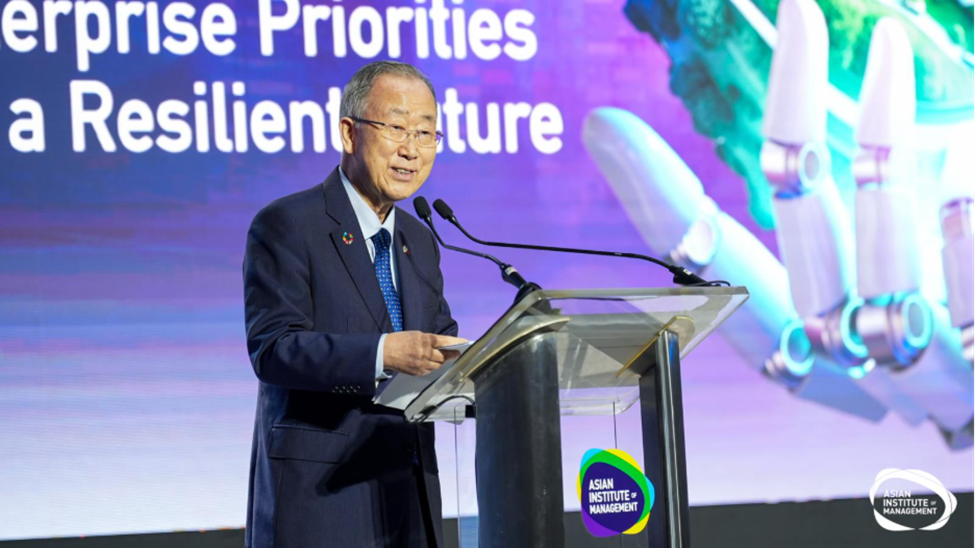
Ban Ki-moon, Former United Nations Secretary-General
The former UN Secretary-General emphasized that transformation requires moving beyond individual leadership to collective will. “It does not depend on one leader, but on the collective will of humanity,” he declared. “Partnership is very important. Nobody can do it alone in this world. No country can do it alone.”
Issuing a clear call to action, he added, “Let us work together to realize a better world for all of us. Unless we join all our hands on the deck together, we will never be able to achieve our dreams, our visions of SDGs and climate change agreement, human rights, women’s rights.”
Addressing business leaders directly, Ban Ki-moon emphasized their unique role, “Enterprise leaders and practitioners like you are uniquely positioned to help prosperity, advance development, and lead our future to new heights.”
His most memorable message centered on what he called global citizenship: “Be a global citizen with passion and compassion. Most people have passion, but it is very hard to find people who have compassion. When both passion and compassion are united, then you are a true global citizen.”
Youth changemakers challenge leaders on climate and sustainability
The urgency of Ban Ki-moon’s appeal found powerful resonance among the forum’s younger voices, who demanded accountability and bold action. 2019 UN Young Champion of the Earth, Louise Mabulo, brought a passionate and unflinching youth perspective to the dialogue.
“We young people are tired. We were born into a world where we looked into the future and saw utopia. And as we’re growing older, we’re seeing less and less of that utopia and we’re seeing very much a dystopia”, Mabulo said.
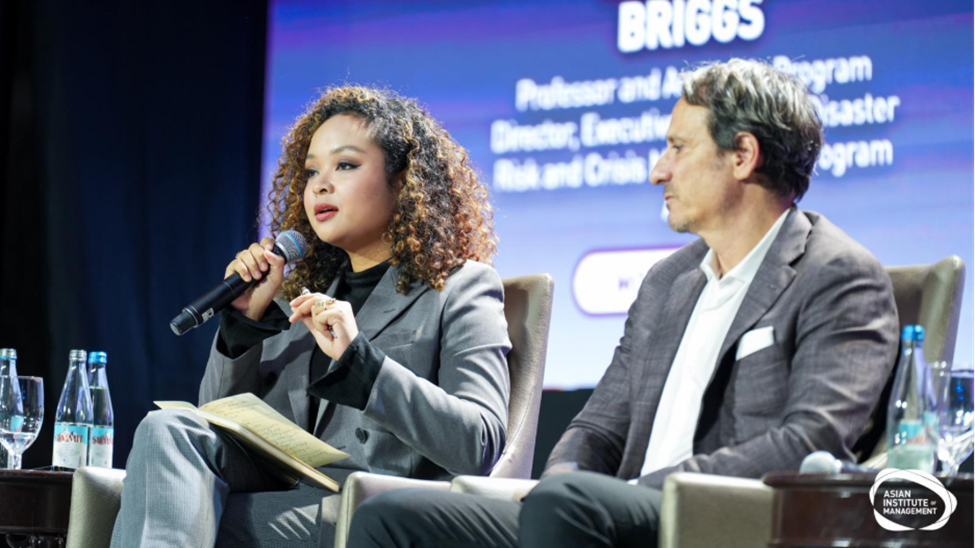
Left to right: Louise Mabulo, 2019 UN Young Champion of the Earth, Founder of The Cacao Project PH; Architect Romolo Nati, Founder and Chief Executive Officer of Italpinas Development Corporation
Rejecting the overuse of “resilience” as a label, she asserted, “We don’t want to be called resilient because it’s used as an excuse that when a storm hits, you’ll bounce back. An earthquake comes; we’ll rebuild. What’s going to be done? I think now is the time for holy rage and outrage at the systems that have been built. And it’s also time for action.” She backed her urgency with compelling data: USD 600 billion in global subsidies currently support unsustainable agriculture, while transitioning to regenerative farming would cost only USD 400 billion. “The solutions exist in the world,” Mabulo emphasized. “We just need to implement them, fund them, and do them.”
AI, inclusion, and the human side of transformation
Throughout the forum, discussions tackled the defining challenges facing enterprises. On artificial intelligence (AI), panelists stressed that successful AI-driven organizations must ensure everyone has a voice in the digital future and bring entire workforces along the transformational journey. Experts called for the Philippines to invest in infrastructure, people, and education, noting that AI’s power depends on the quality of both data and human guidance.
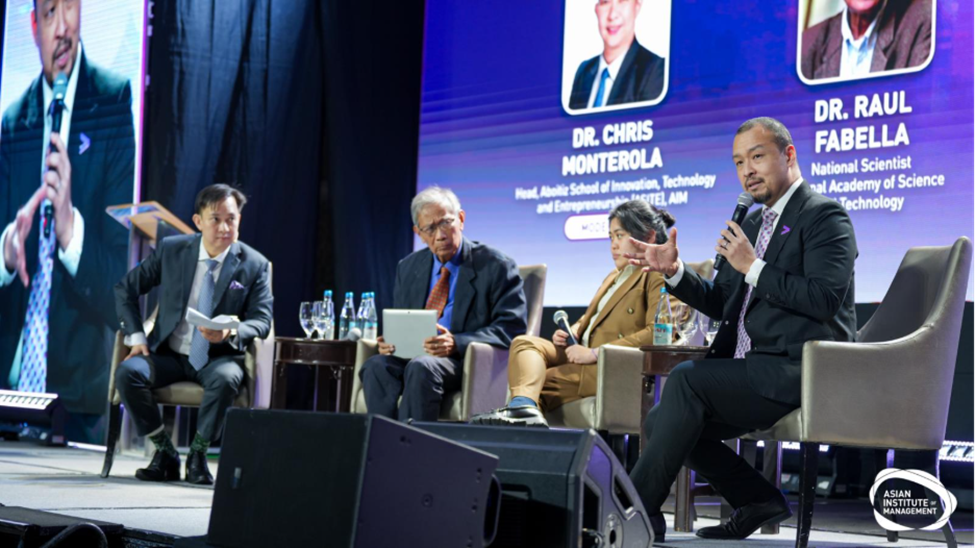
Left to right: Dr. Christopher Monterola, Head of the Aboitiz School of Innovation, Technology, and Entrepreneurship at the Asian Institute of Management; Dr. Raul Fabella, National Scientist of the National Academy of Science and Technology; Ana Mae Yu Lamentillo, Founder and Chief Future Officer of NightOwl AI; Mike Lao, Data and AI Lead of Industry X Lead at Accenture Philippines
Sessions on diversity, equity, and inclusion reinforced that inclusive practices drive both social and business performance. Panelists urged enterprises to invest in inclusion as a moral imperative and a business strategy. The disability rights principle—“nothing about us without us”—challenged leaders to ensure decision-making tables reflect the diversity they claim to champion.
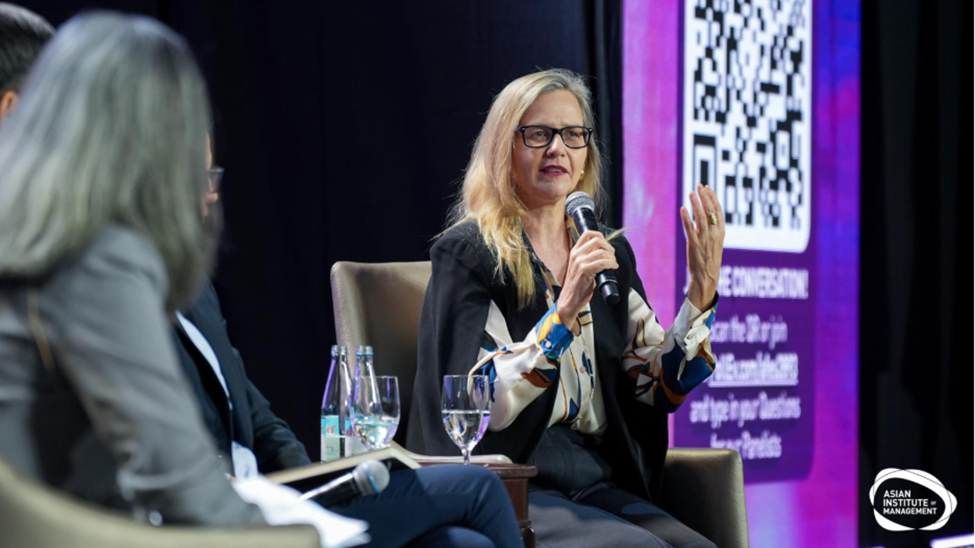
Amanda Satterly, Principal Social Development Specialist (Gender & Development), Private Sector Operations Focal at the Asian Development Bank
The exploration of inclusion and technological transformation paved the way for a broader conversation on how corporations can maintain their sense of purpose amid disruption.
Balancing profitability and purpose
In his closing keynote address, Jaime Augusto Zobel de Ayala explored how leading corporations balance profitability with responsibility and sustainability. He identified what he called “golden threads” connecting the forum’s diverse discussions: clarifying one’s purpose, putting purpose into action, and staying relevant to societal needs.
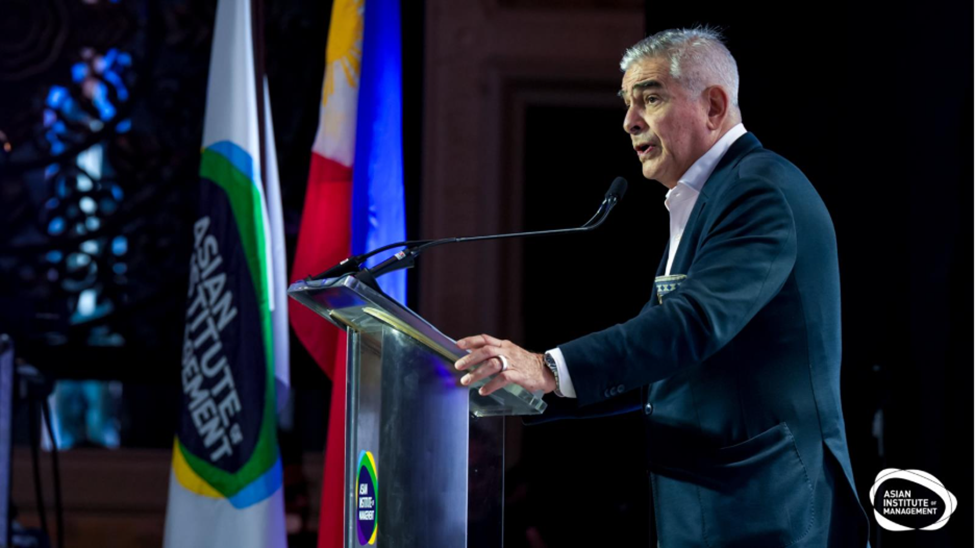
Jaime Augusto Zobel de Ayala, Chairman of the Ayala Corporation
“We share the belief within our group that enterprises have a social responsibility alongside their fiduciary duty to their customers, business partners, and shareholders,” Zobel de Ayala said. He emphasized that Ayala’s corporate purpose, “to build businesses that enable people to thrive,” serves as “the North star for the strategies that we implement, the opportunities we pursue, and the culture that we seek to build.”
He challenged the notion that purpose and profit are at odds: “Fundamentally, we remain a profit-driven business, but for us, operating with sustainability is now not just based on moral imperatives, but also a pathway to long-term value creation and commercial resilience.”“While there is nothing wrong with competition, a lot more can be achieved when we all work together for common causes,” he concluded. “Let that be the clarion call that we all answer amid the disruptions that we face.”
AIM calls to turn insight into impact
Across both days, a central theme resonated: meaningful change begins when ideas are turned into action. Achieving balance between growth and sustainability, innovation and inclusion, and global ambition and local relevance requires shared accountability.
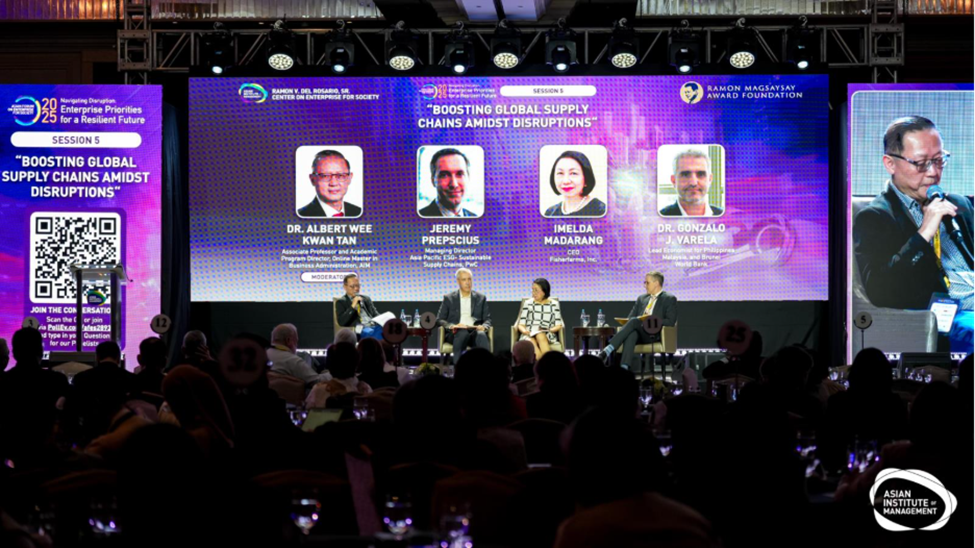
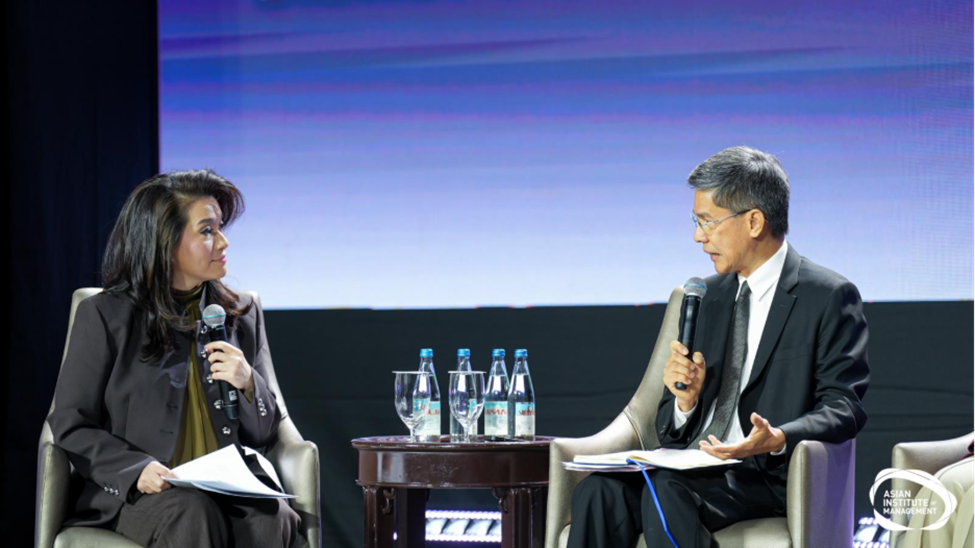
Forum host and panel moderator Cathy Yang, Head of Programs at Cignal TV, Inc.,and Dr. Panitan Wattanayagoran, Former Chairman of the Prime Minister of Thailand’s Security Advisory Committee
Since its launch in 2018, AFES has established itself as Asia’s premier platform for cross-sector dialogue on enterprise and society, consistently attracting world-renowned thought
leaders and changemakers. The 2025 edition reinforced AIM as a nexus for leaders and innovators addressing challenges facing enterprises and communities across the region. AIM President and Dean Dr. Jikyeong Kang reflected on the forum’s impact: “Over the past two days, this venue has been transformed into a vibrant marketplace of ideas, a space where thought leaders, practitioners, innovators, and visionaries from across Asia as well as across the globe have come together for grappling with some of the most preceding challenges of our time.”
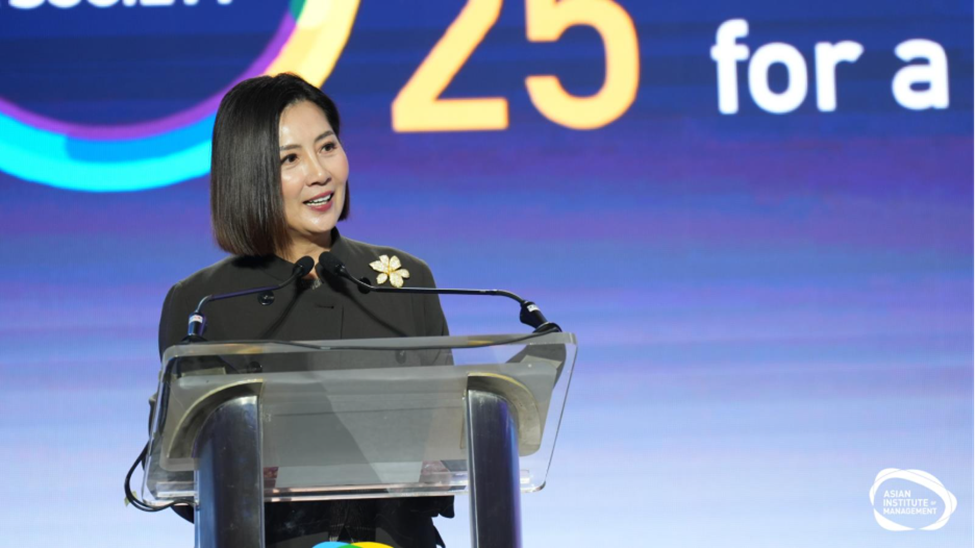
Dr. Jikyeong Kang, President and Dean of the Asian Institute of Management
She emphasized that the forum succeeded in building more than just connection, “We have listened to our discussions, we have reflected on many challenging issues that we need to resolve together, and I genuinely hope that we have built a community and we have created a network of changemakers who know we are not alone in this.”
Dr. Kang concluded with a call to sustained engagement: “As we leave this forum, let us carry forward not just ideas and inspirations, but a renewed commitment to action. We must put what we have learned into action, to hold ourselves accountable to our stated purpose, and to actively seek partnerships and collaborations that amplify our collective ability to create meaningful changes for the world”.
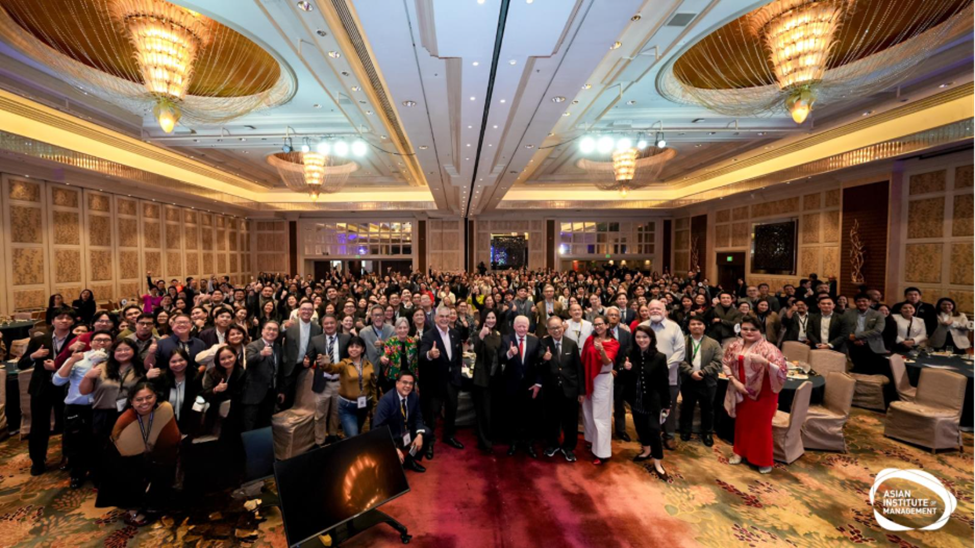
Asian Forum on Enterprise for Society (AFES) 2025 participants
As organizations worldwide grapple with geopolitical tensions, climate acceleration, and technological transformation, AFES 2025 demonstrated the Institute’s unique ability to convene meaningful dialogue that moves from insight to action. Ban Ki-moon’s message of partnership and global citizenship, amplified by the forum’s panelists and participants, exemplified the quality of discourse and collaboration the Institute continues to cultivate on a global stage.