AIM Career Services Forum Convenes C-Suite Executives to Discuss ‘Polycrisis’ Leadership
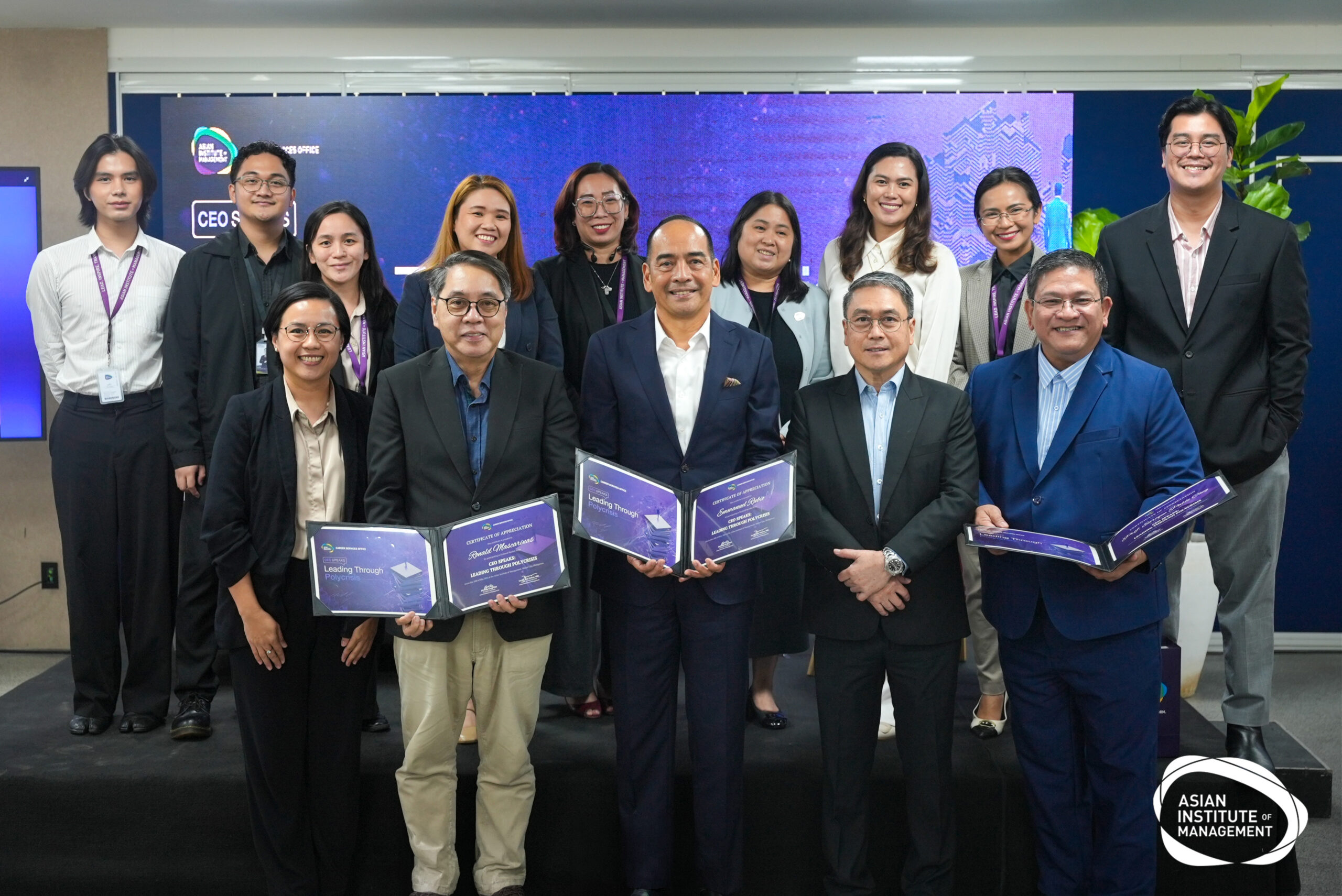
Executive leadership is no longer about managing steady growth; it is about navigating a permanent state of overlapping disruptions. To address this reality, the Asian Institute of Management (AIM) Career Services Office (CSO) convened top business leaders for “CEO Speaks: Leading Through Polycrisis,” an intensive forum designed to prepare MBA students for highly volatile corporate landscapes.
The event moved away from theoretical lectures in favor of a high-impact, interactive fireside format. The panel was guided by moderator Prof. Enrique Pablo O. Caeg, Clinical Professor and Academic Program Director for the Master in Entrepreneurship at AIM, who facilitated the cross-industry dialogue between the student body and the corporate captains.
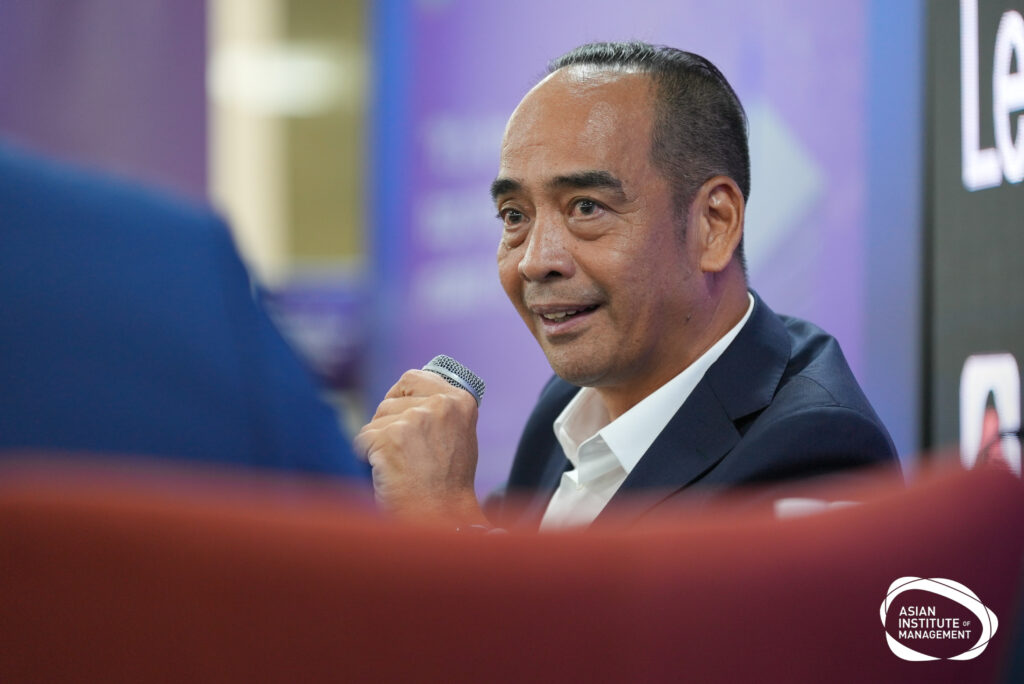
Representing critical sectors of the economy, the featured panel brought together prominent industry leaders to share their battlefield-tested strategies. Emmanuel V. Rubio, President & CEO of Meralco PowerGen Corporation (MGEN), anchored the energy and infrastructure perspective. Highlighting the heavy responsibilities of his sector, Rubio reminded the audience that “power is a very political product” and emphasized that “every decision that we make will have an impact in the lives of the Filipinos.”
When discussing the common notion of whether it is lonely at the top of corporate management, Rubio challenged conventional wisdom. “It’s lonely on top only if you make it, only if you let it, only if you allow it to be,” he said. He added that the weight of the role is felt most deeply when managing organizational shifts. “The hardest decisions I’ve made were decisions on people. When you make decisions about people, you need to make sure that empathy is there,” Rubio noted.
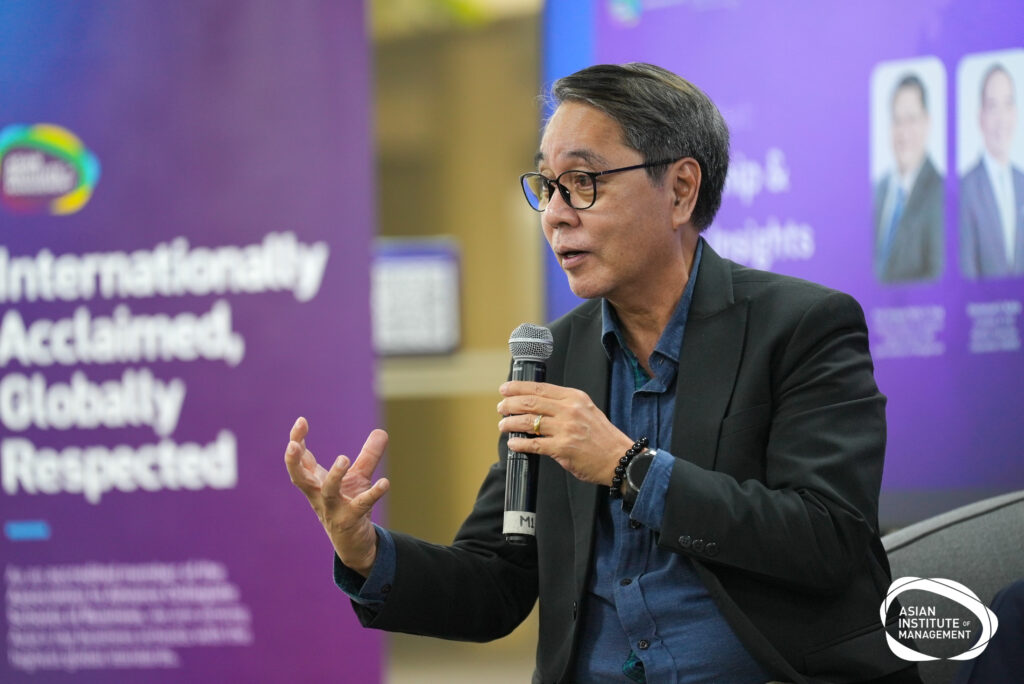
Ronald Daniel R. Mascariñas, Founding President of Bounty Agro Ventures, Inc., delivered sharp insights on logistics, supply chain resilience, and agribusiness agility, focusing heavily on the true role of an executive during times of chaos. “The leader’s job is not to know the answers. It’s to listen to the management team and frame the problem,” Mascariñas asserted, reinforcing that collaboration outweighs top-down dictates in a crisis. “I think that’s the most important job of a leader. Listen and frame the product correctly.”
Rather than looking at sectors in isolation, the discussion focused on cross-industry vulnerabilities and tactical decision-making.
By connecting raw executive experiences directly with student dialogue, the forum successfully bridged the gap between classroom theory and the practical realities of macroeconomic uncertainty. Organized by the AIM Career Services Office, the session served as an active learning opportunity for students looking to align their professional goals with the complex demands of modern corporate governance.