Industry Leaders and Regulators Convene at AIM to Advance Financial Inclusion Through Responsible Innovation
How can financial technology expand access to financial services without compromising trust, security, and regulation?
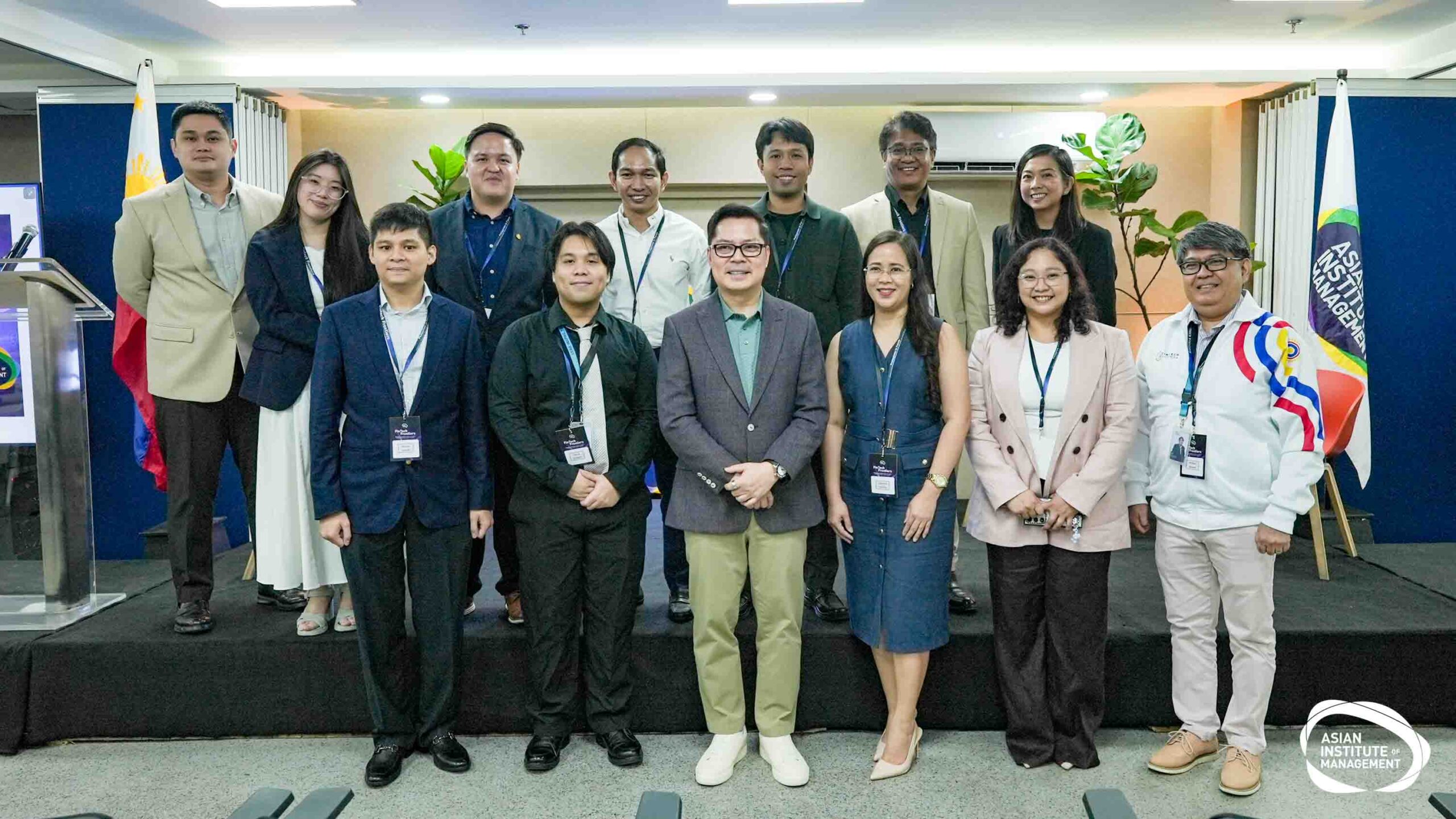
This question anchored FinTech Frontiers: Philippines in Focus – Advancing Financial Inclusion through Risk and Regulation, a student-led forum organized by the Master of Science in Financial Technology (MSc FinTech) Class of 2026 at the Asian Institute of Management (AIM).
The one-day event convened leaders from government, banking, fintech, and consulting to examine one of the country’s most pressing opportunities: harnessing financial technology to create a more inclusive financial system while navigating an increasingly complex regulatory landscape.
The forum featured keynote speaker Lito Villanueva, Executive Vice President and Chief Innovation & Inclusion Officer of RCBC and Founding Chairman of FinTech Alliance.PH. He was joined by guest speakers Christian Lauron, Financial Services Leader and Ecosystem and Knowledge Leader at SGV & Co., and Maria Georgina Carmel O. Fabreag, Financial Inclusion Office of the Bangko Sentral ng Pilipinas (BSP). Panel discussions featured Art Tanseco, Vice President for Business Management – Real Time Payments at Mastercard Philippines; James Patrick Bonus, Founder of AcePointPH; Mary Rose Rebadulla, Chief Compliance Officer of Maya Bank Philippines; Melchor Plabasan, Senior Director of the Technology Risk and Innovation Supervision Department at the Bangko Sentral ng Pilipinas; Anna Theresa Licaros, Chief Compliance Officer of BDO; Christo Georgiev, Founder and CEO of LenderLink Philippines; Jonathan Bryan Salcedo, Head of Business Management – e-Wallet at Maya Philippines; Luis Acuna, Senior Product Manager for Credit & Virtual Limit at Home Credit Philippines; and Tanya Hotchkiss, Chief Technology Officer and Executive Vice President of Cantilan Bank.
More than an academic conference, the event exemplified the MSc FinTech program’s emphasis on experiential learning. Conceived and organized by the AIM students, FinTech Frontiers allowed participants to engage directly with regulators, executives, and innovators who are shaping the future of financial services in the Philippines. The conversations reflected the commitment of AIM to developing leaders who can bridge theory and practice while addressing real-world challenges through responsible innovation.
Throughout the discussions, one message emerged clearly: financial inclusion has evolved beyond simply bringing more people into the formal financial system. Today’s challenge is ensuring that individuals and businesses have access to financial products that genuinely improve their economic opportunities.
Reflecting on the country’s changing financial landscape, Christo Georgiev, Founder and Chief Executive Officer of LenderLink Philippines, observed that digital financial services have significantly reshaped what it means to be “banked.”
“There are a lot less unbanked people in the Philippines today in the classical sense because people now have access to e-wallets and digital financial services. But the gap within the underserved sector has remained quite large. Many still don’t have access to the best credit terms or the full suite of financial products available on the market.”
His observation highlighted an important shift in the conversation around access to financial services: access to an account is only the first step. The greater challenge lies in expanding access to affordable credit, savings, insurance, and other financial tools that enable individuals and businesses to build long-term financial resilience.
As digital financial services continue to grow, speakers also emphasized that technology alone is not enough. Trust remains the foundation of financial inclusion, particularly among first-time users and underserved communities.
For Tanya Hotchkiss, Chief Technology Officer and Executive Vice President of Cantilan Bank, building that trust still requires strong human relationships.
“It’s absolutely central to the creation of trust. If you want people to move to a different product, including digital financial services, you have to invest in that communication as well—and it has to happen at the branch level.”
Her perspective underscored that digital transformation is most effective when complemented by community engagement and personalized support, allowing customers to adopt new technologies with confidence.
The discussions also challenged the notion that regulation slows innovation. Instead, speakers presented governance and compliance as key enablers of sustainable fintech growth.
Addressing students and aspiring fintech professionals, James Patrick Bonus, Founder of AcePointPH, encouraged future innovators to balance technical expertise with creativity while recognizing the important role regulations play in protecting consumers.
“Innovation is merging the technical with the creative. At the end of the day, we want to make money. But the regulations are there, the compliance policies are there, to protect those who are overly aggressive and those who are vulnerable. We need to be creative enough to turn in a profit, while at the same time achieving both the compliance objectives and the business objectives, in the short term and in the long run.”
Echoing this message, Mary Rose Rebadulla, Chief Compliance Officer of Maya Bank Philippines, encouraged participants to embrace regulation as part of the innovation process rather than viewing it as a constraint.
“Do not be afraid of regulations. They should be design considerations, not an afterthought. When something sounds unclear, we can always consult our regulators. Make compliance and regulations a design consideration, and if you’re in doubt, keep calm and call your compliance officer—and then the BSP.”
The forum’s emphasis on responsible innovation also resonated in a message from Sen. Bam Aquino, who underscored the importance of ensuring that emerging technologies are harnessed to create a more equitable and people-centered future. He expressed optimism that conversations among regulators, industry leaders, academics, and aspiring professionals can help prepare the country for the opportunities and challenges of a rapidly evolving digital economy.
“Naniniwala po kami na napakahalaga ng panibagong teknolohiya para makamit natin ang makatarungan at makataong kinabukasan para sa ating bansa.
Inaasahan ko po na ang pagpulong na ito ay makakatulong para maging future-ready ang ating mga regulators, industry leaders, academics, at aspiring professionals.
Asahan niyo po na may kakampi kayo sa Senado na susulong din ng tamang paggamit ng panibagong teknolohiya para masolusyunan ang pangangailangan ng ating bayan.”
(We believe that emerging technologies are essential in helping us achieve a just and humane future for our nation.
I hope this gathering will help equip our regulators, industry leaders, academics, and aspiring professionals to become future-ready.
You can count on having an ally in the Senate who will continue to advocate for the responsible use of new technologies to address the needs of our people.)
His message reinforced a recurring theme throughout the forum: technology achieves its greatest potential when innovation is guided by inclusion, accountability, and a commitment to improving lives.
Together, the discussions illustrated that the future of fintech depends not only on technological advancement but also on collaboration among regulators, financial institutions, technology providers, and innovators. Expanding financial inclusion requires solutions that are accessible, trustworthy, and built on sound governance.
Through initiatives such as FinTech Frontiers, the Asian Institute of Management continues to prepare future leaders to navigate the evolving financial landscape with both technical expertise and ethical leadership. By connecting students with industry practitioners and policymakers, the MSc FinTech program equips graduates to contribute to a financial ecosystem that advances inclusion, fosters innovation, and supports sustainable economic growth in the Philippines and beyond.