
The MBA That Pays for Itself Before You Turn 30
How a graduate of the Master in Business Administration (MBA) program at the Asian Institute of Management (AIM) turned business education into entrepreneurial success, a Forbes recognition, and a return on investment that continues to compound.
Most people evaluate an MBA the way they evaluate any major investment.
They calculate the program fee. They weigh the opportunity cost. They estimate how long it will take to recover the expense through promotions, salary increases, or new career opportunities.
In an era of online learning, professional certifications, and rapidly changing career paths, graduate business education faces more scrutiny than ever before. Prospective students want evidence that the investment is worth making.
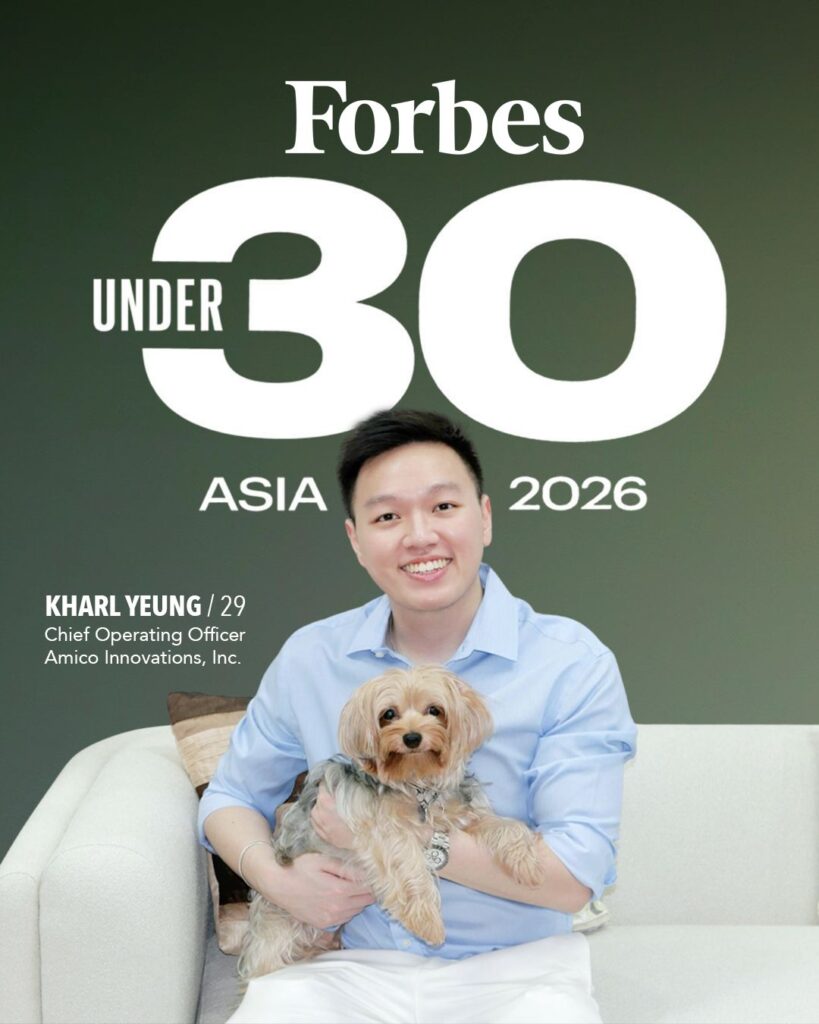
For Kharl Christian Yeung, that answer arrived long before he turned 30.
Since graduating from the MBA program at AIM in 2021, Yeung has gone on to co-found Amico Innovations, a fast-growing consumer brand, and earn a place on the prestigious Forbes 30 Under 30 Asia list—one of the region’s most recognized distinctions for young entrepreneurs, innovators, and changemakers.
Yet the significance of his story is not simply that he achieved success at a young age. It is how quickly his trajectory accelerated.
The AIM MBA did not create his ambition. It amplified it.
A Different Kind of Return
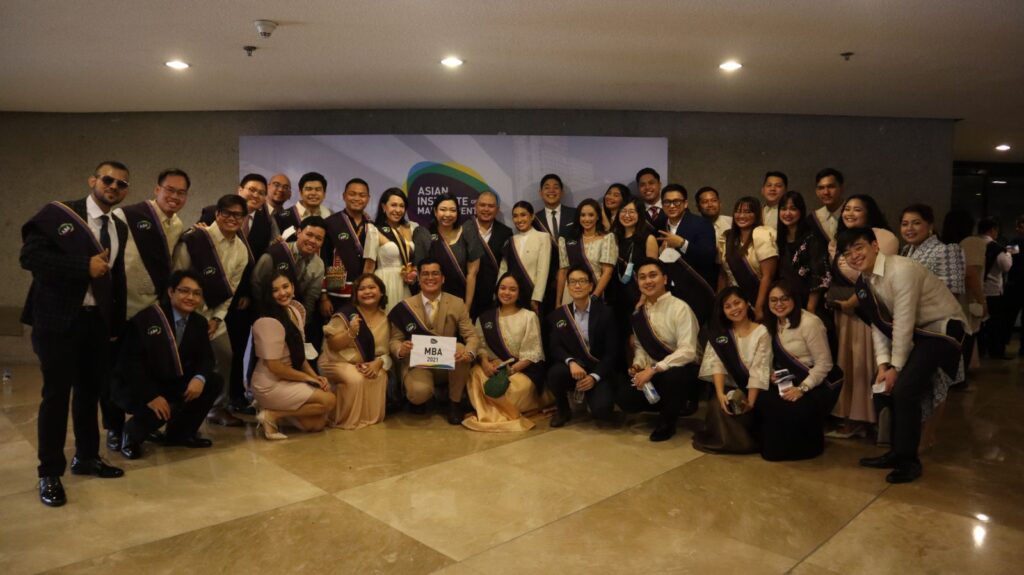
When Yeung enrolled in the MBA program, he was not following a carefully scripted plan toward entrepreneurship.
At the time, he was working in banking and still exploring what he wanted his long-term career to look like.
“I initially saw the MBA as a productive way to buy myself time while figuring out what I really wanted to do,” he says.
Like many professionals, he entered the program expecting to strengthen his credentials, deepen his business knowledge, and improve his career prospects.
What he encountered was something less obvious but ultimately more valuable.
The AIM MBA reshaped the way he approached problems.
Through the case method, students are immersed in real business situations, challenged to analyze decisions, identify opportunities, and recommend solutions. Rather than studying theories in isolation, they learn by stepping into the shoes of executives and entrepreneurs facing complex challenges.
“Every case was essentially a deep dive into how a business was built, where it went right, where it went wrong, and what management could have done differently. Looking back, it felt like a shortcut to decades of business experience.”
Rather than gaining experience with one company at a time, AIM students are exposed to hundreds of organizations, industries, and management situations over the course of the program. The result is not simply more knowledge—it is a broader perspective and a more structured approach to decision-making.
Learning to See Beyond Finance
Before graduate school, Yeung’s professional world was largely centered on finance.
Through courses in strategy, marketing, operations, leadership, and organizational behavior, he developed a more holistic understanding of how businesses function and grow.
“There wasn’t one specific class or professor that changed everything,” he reflects. “It was really the cumulative experience of looking at businesses from different angles.”
This ability to connect multiple business disciplines became especially important when he entered the world of venture building.
Successful entrepreneurs rarely have the luxury of focusing on a single function. They must understand customers, products, operations, finance, talent, and growth strategy—often simultaneously.
The AIM MBA experience helped prepare him for exactly that reality.
“At the Asian Institute of Management, you’re constantly switching perspectives. One day you’re looking at a company through finance, another through marketing, strategy, operations, or organizational behavior. That trains you to see the bigger picture instead of focusing on just one part of the business.”
The mindset would eventually become a competitive advantage as he moved from evaluating businesses to building them.
The Opportunity That Changed the Trajectory
Career-defining moments are often impossible to recognize while they are happening.
For Yeung, one of those moments arrived through the AIM Career Services Office (CSO).
Through a career fair organized by the institution, he discovered an opportunity in venture building—a field that was completely different from his banking background but would ultimately reshape his future. The experience exposed him to startups, innovation, and the realities of building businesses from the ground up.
“The exposure that CSO provided opened doors that I probably would not have discovered on my own.”
Working closely with startups gave him firsthand insight into entrepreneurship and venture creation. Over time, those experiences would contribute to the founding and growth of Amico Innovations.
“That single opportunity set off a chain of events that eventually led me to co-found and help scale Amico Innovations.”
The lesson is an important one for prospective students evaluating the value of graduate education. Sometimes the greatest return does not come solely from classroom discussions or textbook frameworks. Sometimes it comes from broader access—to opportunities, industries, and networks that would otherwise remain out of reach.
From Exposure to Execution
Entrepreneurship is often romanticized as a leap of faith. In reality, successful founders combine vision with disciplined execution.
As Yeung transitioned into venture building and later co-founded Amico Innovations, he found himself drawing on lessons developed throughout the AIM MBA experience.
“The MBA exposed me to venture building and entrepreneurship and gave me the confidence to pursue a very different path. It helped me move from analyzing businesses to actually building them.”
That confidence is often overlooked when discussing return on investment.
Knowledge can be acquired in many ways. Confidence—the belief that you can apply that knowledge in unfamiliar situations—is far more difficult to develop.
For many entrepreneurs, that difference can determine whether opportunities are pursued or left unexplored.
The Return That Keeps Compounding
Today, Yeung’s Forbes recognition serves as a visible milestone in a journey that continues to unfold.
When asked about the value of his AIM MBA, he does not immediately point to accolades, titles, or financial outcomes.
Instead, he points to something more enduring.
“The biggest return is the way the AIM MBA shaped how I think. The frameworks, discipline, and decision-making process I developed there continue to influence every major business decision I make today.”
The ability to consistently make better decisions—to evaluate opportunities more effectively, solve problems more systematically, and navigate uncertainty with greater confidence—is the kind of advantage that compounds over an entire career.
For Kharl Yeung, his AIM MBA paid for itself in more ways than one. Not simply because it opened doors, but because it equipped him to walk through them. And long before turning 30, those returns had already begun to speak for themselves.