When Knowing Is Not Enough: Rethinking Crisis Leadership in the Philippines
In a country where disasters are an enduring reality, the challenge is no longer predicting the next crisis—it is turning knowledge into timely, coordinated action.
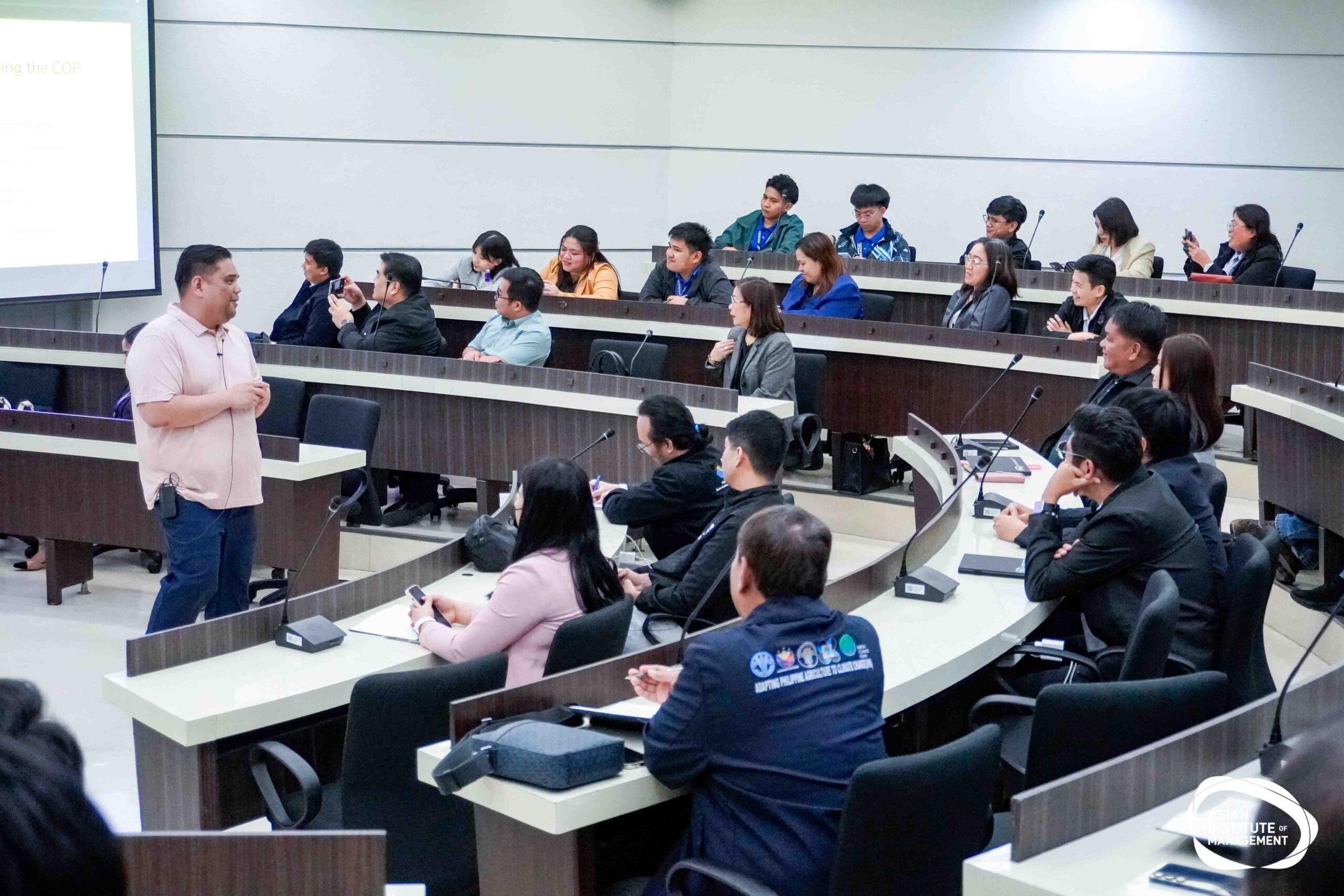
This critical gap between information and action took center stage at the Masterclass in Disaster Risk and Crisis Management: “Next-Generation Crisis Leadership: Bridging Data Silos with Real-Time Operational Intelligence,” hosted by the Asian Institute of Management (AIM) School of Executive Education and Lifelong Learning (SEELL). The session brought together representatives from government agencies, local government units, financial institutions, healthcare organizations, academic institutions, and the private and development sectors for a timely discussion on strengthening the way organizations anticipate and respond to increasingly complex crises.
Prof. Chad Michael Briggs, Academic Program Director of AIM Executive Master in Disaster Risk and Crisis Management (EMDRCM) program and Mr. Jason Bonaga, AIM Adjunct Faculty and Disaster Risk and Crisis Management expert, highlighted a persistent paradox in crisis management: institutions often know that threats are coming. They have access to forecasts, risk assessments, contingency plans, and institutional knowledge. Yet a disconnect can remain between what is known, what policies prescribe, and what organizations are ultimately able to do when a crisis unfolds.
This is what Prof. Briggs described as a “Cassandra complex”—the challenge of recognizing impending danger without being able to translate that knowledge effectively into action.
The issue is particularly relevant in an environment where crises increasingly cross organizational and geographic boundaries. A decision that makes sense within the mandate of one institution can have unintended consequences elsewhere when agencies do not share a complete picture of evolving conditions.
Reflecting on Typhoon Ulysses in 2020, Briggs pointed to the disconnect between available information on rivers and dams and the actions taken during the crisis. Decisions made within individual domains may have appeared reasonable, yet collectively contributed to worsening impacts—a powerful illustration of why crisis leadership must extend beyond institutional silos.
Addressing this challenge requires more than technology or better forecasting. It calls for sustained investment in leadership development that equips decision-makers to navigate complexity and collaborate across institutions.
For government agencies and private organizations, building this capacity requires approaches grounded in their specific operating environments, risks, mandates, and institutional realities. Through AIM-SEELL, organizations can work with the Institute to design executive learning programs and create strategies that address their specific operational risks, leadership challenges, and institutional contexts. These programs can help equip leaders and teams to strengthen decision-making, coordination, and organizational readiness in the face of complex and evolving risks. AIM-SEELL custom programs can be designed around the needs and schedules of partner organizations, providing a focused pathway for institutions seeking to build crisis leadership capabilities across their workforce.
For professionals seeking to deepen their expertise, AIM also has the EMDRCM degree program which offers a pathway to develop the strategic leadership capabilities needed to understand complex risks, navigate uncertainty, and lead across interconnected systems.
As crises become more interconnected and unpredictable, the institutions best prepared for the future will not necessarily be those with the most data or the most detailed plans. They will be those that cultivate leaders who can make sense of uncertainty, coordinate across institutions, and translate intelligence into timely, decisive action. Strengthening these leadership capabilities will be essential to building a more resilient public sector and safeguarding communities in an increasingly complex risk environment.
Government agencies, local government units, and public sector organizations looking to strengthen their crisis leadership capabilities can learn more about customized executive learning solutions and short courses from the AIM School of Executive Education and Lifelong Learning (AIM-SEELL) by visiting http://campaigns.aim.edu/custom-government.