AIM Advances the Case for Anticipatory Climate Finance Across Asia and the Pacific
MAKATI CITY, Philippines—Before relief trucks are dispatched, before emergency funds are mobilized, and before disaster footage fills the headlines, there is a critical window to act—to invest, to prepare, and to protect.
Yet across Asia and the Pacific, that window remains dangerously underutilized.
The region accounts for 75% of the world’s disaster impact, with losses measured not only in billions of pesos but more so in lives and livelihoods damaged. These escalating costs far exceed what proactive investment in resilience would require. The challenge is not the unpredictability of climate threats, but the persistent reality that funding too often arrives only after devastation has occurred.
While international climate commitments make headlines, the communities on Asia’s coastlines, flood plains, and typhoon corridors wait—not for promises, but for protection that comes before the storm, not after the wreckage.
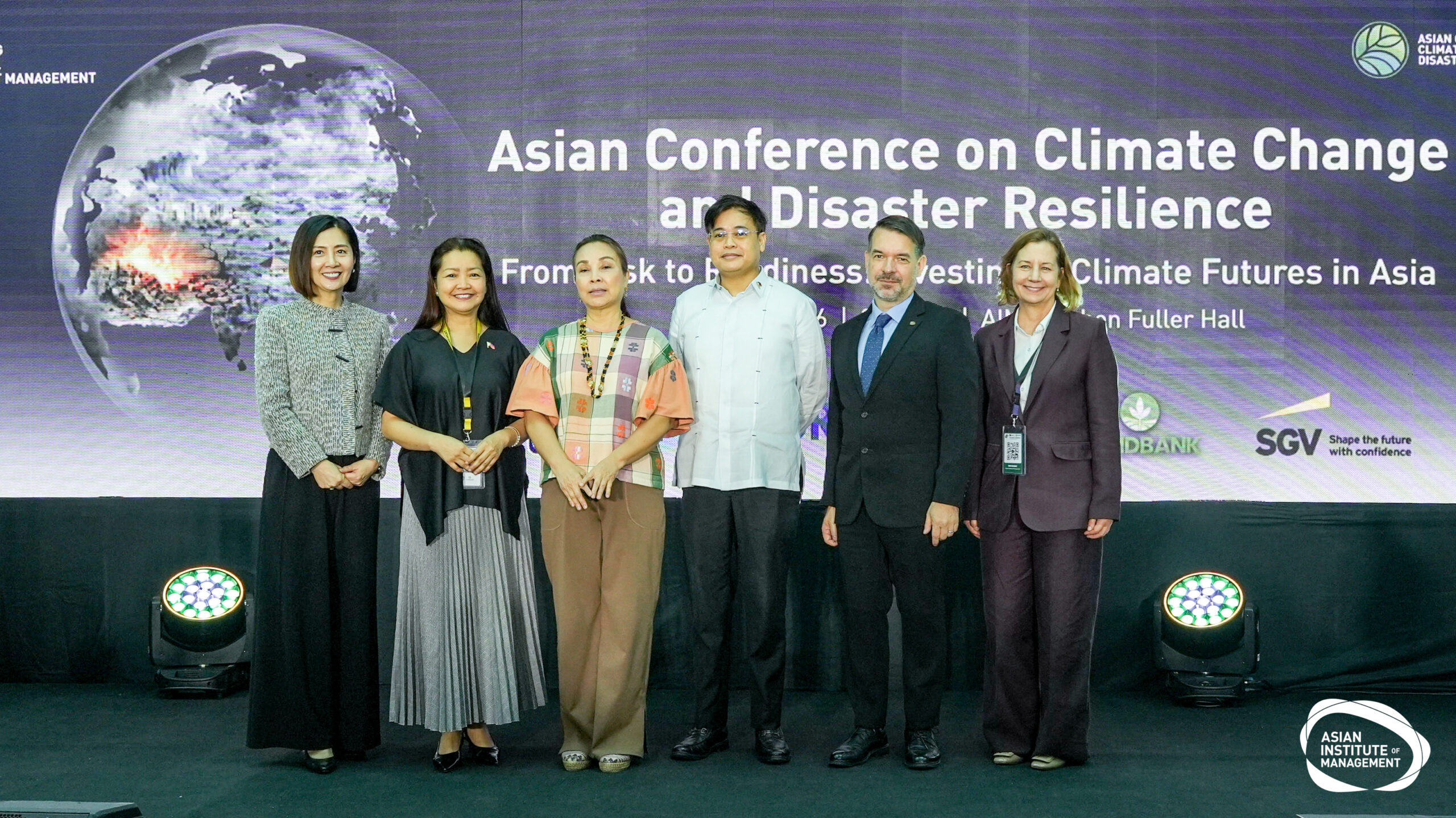
Recognizing this urgent need, the Asian Institute of Management (AIM) convened policymakers, finance ministers, private sector innovators, and local government executives on 30 April 2026 for the Asian Conference on Climate Change and Disaster Resilience (ACCCDR) 2026, united by a shared imperative to ensure that climate finance reaches frontline communities before the next disaster hit.
Anchored on the theme “From Risk to Readiness: Investing in Climate Futures in Asia,” the conference reframed climate preparedness as more than a humanitarian issue. It positioned resilience as an urgent economic, governance, and national security priority.
“Climate finance is a reflection of our values. It’s about which systems we choose to strengthen and whose lives we decide are worth the investment,” said Jikyeong Kang, PhD, President and Dean of AIM, setting the tone for a day of solutions-oriented dialogue.

Senator Loren Legarda delivered the keynote address, calling for stronger climate adaptation measures, more robust disaster risk reduction frameworks, and data-driven solutions to build a forward-looking resilience strategy. Extending the discussion into the national security sphere, General Romeo S. Brawner Jr., Chief of Staff of the Armed Forces of the Philippines, emphasized the importance of climate readiness in strengthening national security and long-term governance.
Across the sessions, a consistent message emerged: delayed climate funding compounds losses, inflates recovery costs, and leaves the region’s most vulnerable communities without the protection they need. As Prof. Chad Briggs warned in his stage-setting remarks, “The historical record upon which we built our institutions stopped predicting the future we are now living in.”
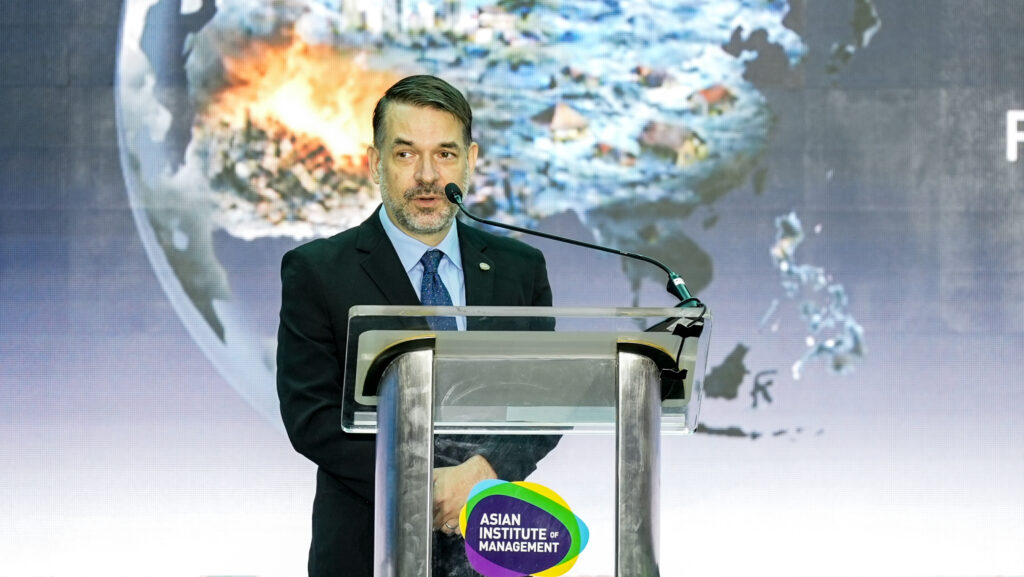
He outlined the case for a fundamental shift in how climate finance operates: “Anticipatory finance releases liquidity on the basis of forecast triggers rather than on the basis of damage assessment after the fact. It turns climate finance from a recovery instrument into a strategic shield.” The stakes of getting this right, he argued, could not be higher: “The question is not whether climate finance exists. Billions exist. The question is whether we build the architecture that delivers it before the disaster — or whether we will keep counting new poor Filipinos in the millions after the fact.”
The conference featured panel discussions covering anticipatory climate financing, risk-layered investment strategies, climate insurance and corporate asset protection, and last-mile delivery mechanisms—offering a systems-level view of how financial architecture must evolve to meet the region’s escalating climate risks.
Among the distinguished speakers were Kathryn Milliken, Senior Climate Change Specialist at the Asian Development Bank; Radu Tatucu, Senior Financial Sector Specialist & Financial Sector Lead at World Bank; and Secretary Robert E.A Borje, Vice Chairperson and Executive Director of the Climate Change Commission of the Philippines. Their insights highlighted the importance of aligning global capital flows with local resilience needs.
Additional perspectives from the Bangko Sentral ng Pilipinas, the Department of Finance, WWF Philippines, and local government units ensured that the conversation reflected every level of the financing chain, from international funders to community implementers.
A defining concern of ACCCDR 2026 was the “first-mile to last-mile disconnect”—the persistent failure of global climate funds to reach local governments and frontline communities in time to reduce disaster impact. In her keynote, Senator Loren Legarda captured the stakes plainly: “We’ll become experts in counting the dead, in repairing the broken. But we’ve not yet mastered the art of anticipating the blow. This disconnect is critical.”
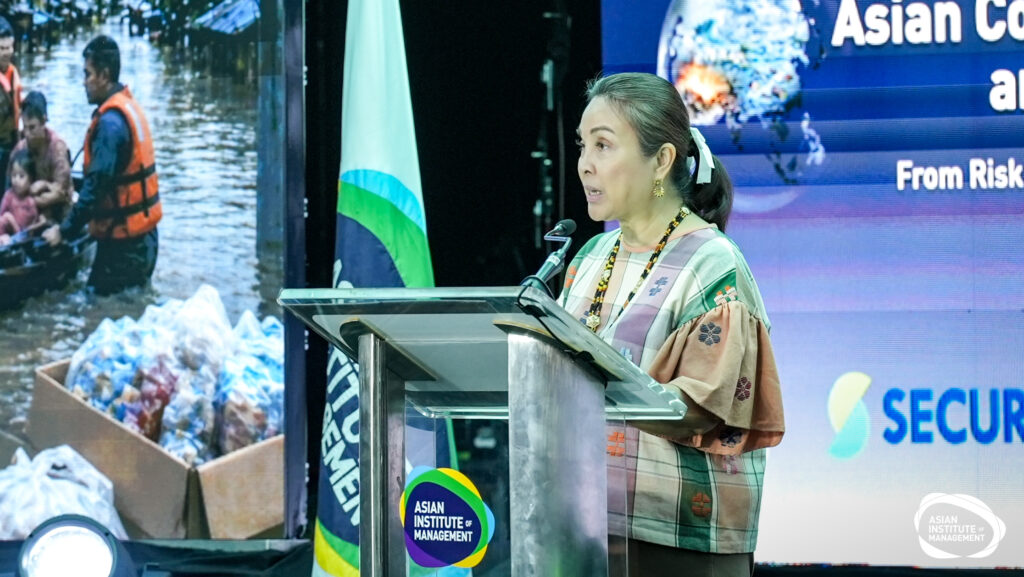
She further challenged participants to redefine success in disaster management: “Preparedness is measured by what we prevent from being lost, not by what we rebuild after.” Discussions centered on the need to redesign financing systems so that resources flow directly to local government units and vulnerable communities before crises escalate, rather than in the aftermath.
The era in which post-disaster funding serves as the primary response model is no longer viable.
In its place, anticipatory systems—powered by data, strengthened by interagency collaboration, and enabled by agile financing mechanisms—must become the new regional standard.
The ACCCDR 2026 reinforced the Institute’s role as a convening force for transformative dialogue where leadership, policy, and sustainable development meet. By bringing together voices from government, multilateral finance, and the private sector, AIM continues to advance its mission of developing principled leaders shaping solutions to Asia’s most pressing challenges.