
Why Asia is the Frontline for Sustainable Development and Crisis Leadership
Many of the world’s most pressing development and disaster challenges are not happening in theory or case studies. They are unfolding across Asia today, affecting millions of people and testing public systems at scale.
Key takeaways
- Asia faces the highest disaster and climate risk globally. The region experiences the most frequent and severe climate-related emergencies year after year.
- Urban growth in Asia is happening at an unmatched scale. Rapid city expansion places sustained pressure on housing, infrastructure, and public services.
- Learning in Asia means engaging with real, large-scale challenges. Development and crisis leadership here involve complex, high-impact problems that cannot be fully replicated elsewhere.
Asia is home to some of the world’s most complex development and disaster challenges. Climate-related events continue to cause significant loss of life and economic damage, while rapid urban growth places sustained pressure on public systems. Together, these conditions make Asia a setting where sustainable leadership is shaped by real constraints and real consequences, not abstract models.
While many development programs rely heavily on theory, Asia presents immediate,visible challenges. Crises unfold in real time, often affecting millions simultaneously. This makes the region a powerful setting to study and understand how sustainable development and crisis leadership operate under pressure and at scale.
Asia faces more disasters than any other region
Global data consistently shows that Asia experiences the highest number of natural disasters. In 2023, the World Meteorological Organization reported that Asia was the most disaster-hit region due to weather, climate, and water-related hazards, including floods, storms, droughts, and heatwaves.
The United Nations Economic and Social Commission for Asia and the Pacific states that since 1970, around 2 million people in Asia and the Pacific have died as a result of disasters.
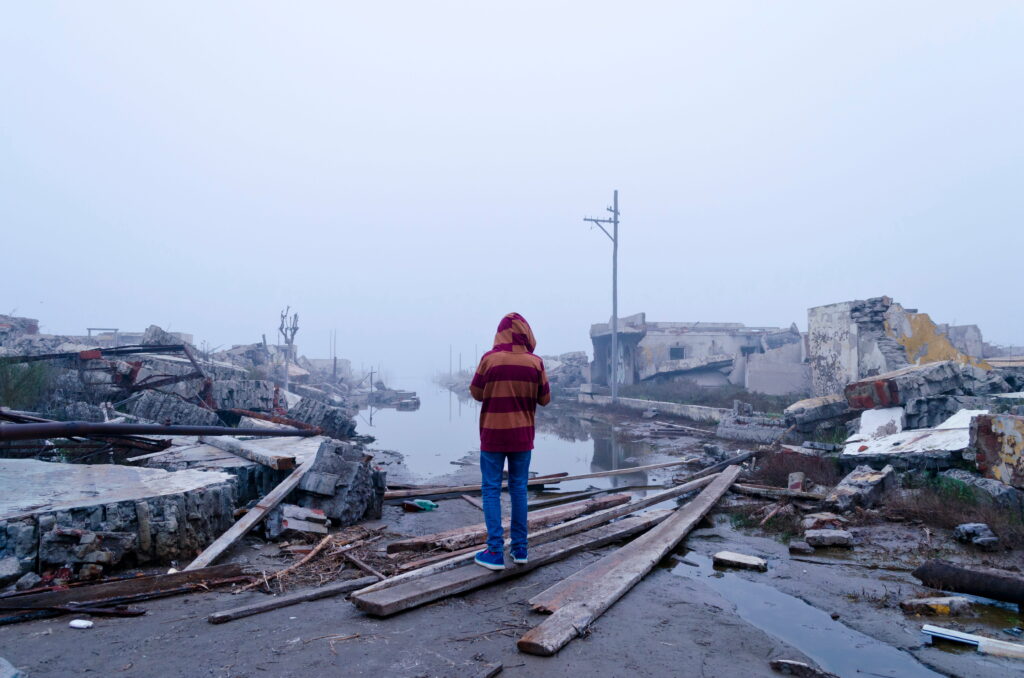
Some of the region’s biggest crises unfold in days, not decades. Severe flooding in South and Southeast Asia over the past two years caused widespread displacement and economic damage, with over 1,200 lives lost.
These numbers show that disasters in Asia are frequent and severe. They affect governments, businesses, nonprofits, and communities. This environment highlights the demands of leadership during a crisis, while also raising longer-term development questions about how risk is reduced and resilience is built.
Climate change amplifies risk across the region
Asia’s exposure to climate change makes development and crisis issues more complex. United Nations data and reporting indicate that climate change in Asia is intensifying existing vulnerabilities. Warming trends in Asia are outpacing global averages, increasing the likelihood of extreme weather events, sea level rise, and long-term community risk.
Sea level rise alone places tens of millions of coastal residents at risk. Projections show that by 2100, coastal flooding could affect at least 49.3 million people each year, representing roughly 1.9 to 4.9 percent of the population. Risk is highest in the Pacific and Southeast Asia, underscoring the need for targeted adaptation and mitigation in these regions.
Climate change adds pressure to already stretched systems. In Asia, growing populations and energy demand make weather extremes harder to absorb.
This combination of hazards means that countries in the region are continuously learning how to prepare for and respond to climate-related shocks. For students of sustainable development or crisis leadership, this environment provides exposure to complex decision-making under stress.
Rapid urban growth challenges public systems
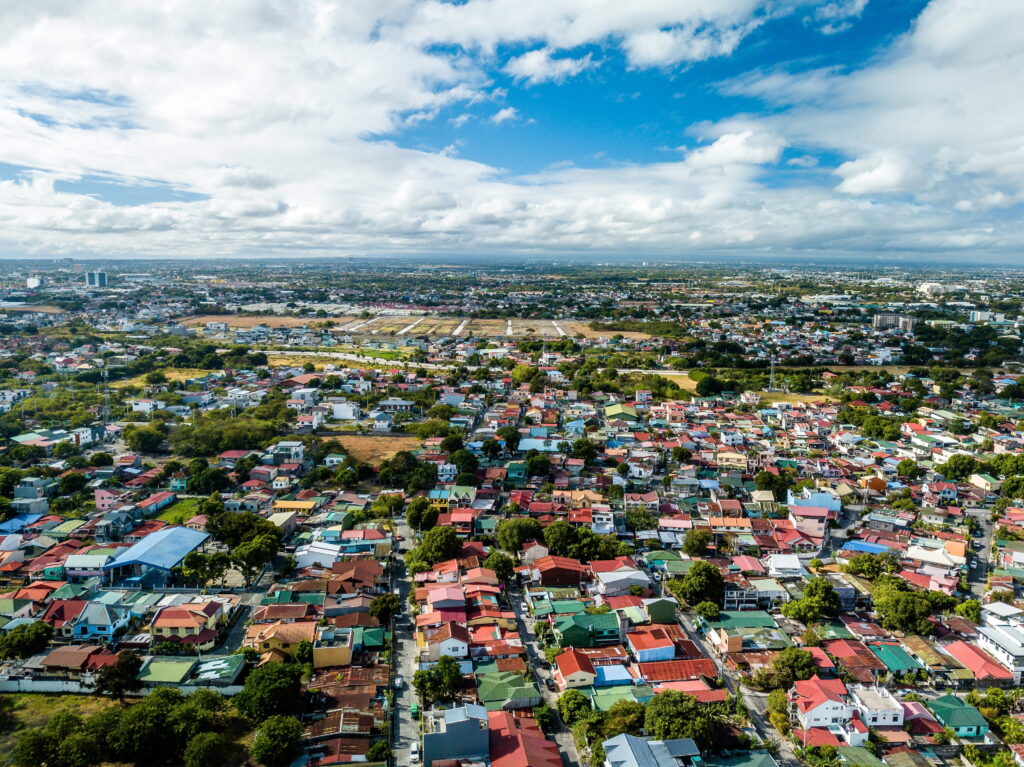
Urban growth is another trend shaping development work in Asia. Over half of the global urban population lives in the region, with more than 2.2 billion people living in urban areas. By 2050, the continent’s urban population is expected to increase by 50 percent, bringing the total to as many as 1.2 billion additional people living in cities and towns.
As Asian cities expand, public services often lag behind demand. Shortfalls in housing, transport, and infrastructure push many into informal settlements—now home to hundreds of millions across East, Southeast, Central, and South Asia.
These rapid shifts strain how governments plan services, invest in infrastructure, and respond to crises. Climate risks intensify where planning is weak, and populations cluster in hazard-prone areas.
People working on sustainable development in Asia operate within large, complex systems. Leadership in these settings requires balancing growth with congestion, infrastructure demand, poverty, and climate risk. These challenges are not simplified case studies. They play out every day across many Asian cities.
Why learning here matters for development and crisis leadership
Learning leadership in a region where crises are constant places students in direct contact with large-scale, high-stakes challenges. Rather than relying solely on textbooks on urban risk, climate policy, and disaster response, students in Asia encounter real-world examples of crisis management as they unfold on the ground.
For example, weather-related disasters require coordination across government departments, emergency responders, non-profit partners, and international agencies. Students can see how public systems respond to floods or heatwaves, and how policy decisions affect outcomes for vulnerable communities.
Urbanization tests the capacity of planning systems, housing policy, and basic public services. Here, students can observe longstanding issues, including informal settlement growth, infrastructure pressures, and rapid demographic shifts, that shape urban governance and strategy.
Climate change adds another layer. Countries in Asia are actively planning for adaptation and risk reduction, creating evolving case studies in water security, coastal protection, energy systems, and community resilience. These are not controlled simulations. They are real situations with real stakes.
This exposure is valuable for professionals who want to understand how to lead programs and shape policies that affect millions.
Asia at the center of learning and practice
Asia’s challenges are also global challenges. Solutions developed here have implications far beyond national borders. What is learned about managing climate risk, planning cities for growth, and coordinating large-scale disaster responses can inform policies and programs in other parts of the world.
A learning environment rooted in Asia’s context provides students with access to real policy debates, active development challenges, and institutions operating at scale. Asia’s diversity of conditions—from megacities to coastal deltas, from mountain regions to expansive river basins—means that no two development problems are the same.
For anyone serious about understanding sustainable development and crisis leadership at scale, Asia offers exposure unmatched in many other regions. The challenges here are broad, complex, and happening now. There is no substitute for studying where the problems are largest and where decisions affect millions of people.
The data and real-world events shaping Asia today provide a foundation for deep learning in development policy and crisis management. Students and professionals working and studying here engage directly with the issues that matter most for sustainable and resilient futures.
Why Asia is the real-world hub for sustainable development and crisis leadership
Asia shows what development and crisis leadership look like when the stakes are high and the margin for error is small. Climate risk, rapid urban growth, and repeated shocks are not separate issues here. They overlap, compound, and play out across large populations at once. This reality shapes how policies are designed, how public systems respond, and how long-term development goals are pursued under pressure.
Learning sustainable development in Asia means engaging with problems as they exist, not as simplified examples. Students see how decisions ripple through communities, how trade-offs are made when resources are limited, and how development paths are shaped by risk as much as opportunity.
Asia offers direct exposure to the conditions that will define global development in the decades ahead. For those seeking to understand sustainable leadership in practice, there is no setting where the lessons are more immediate or more consequential.
If you want to study sustainable development and crisis leadership in real, ongoing, large-scale contexts, Asia offers an unparalleled environment. At the Asian Institute of Management, students engage directly with the region’s development realities through practice-driven learning grounded in Asia’s context.
Explore our Master in Development Management or Executive Master in Disaster Risk and Crisis Management programs, and build the perspective needed to make decisions where the stakes are highest.
Get in touch with us today.
Frequently asked questions
Is Asia only relevant for development and crisis studies focused on the region itself?
No. Many challenges faced in Asia, such as climate adaptation, disaster risk reduction, and managing rapid urban growth, mirror issues emerging in other regions. Lessons drawn from Asia often inform global policy discussions and international development practice.
How does studying in Asia differ from learning about development through case studies alone?
Studying in Asia places learners closer to ongoing challenges rather than retrospective examples. Policies, programs, and responses are unfolding in real time, allowing students to observe how decisions are made under pressure and with real constraints.

Does exposure to large-scale challenges mean less focus on long-term development planning?
No. In Asia, crisis response and long-term development planning are closely linked. Repeated shocks from climate change and urban pressures require governments and organizations to plan for recovery, risk reduction, and sustainable growth simultaneously.